Commercial Paper Shredder Rental Costs: What Businesses Should Budget For
Commercial paper shredder rental costs vary because office requirements vary. A small team with moderate paper volumes has a different requirement from a legal practice, medical facility, finance department, warehouse archive, or corporate records centre.
Machine capacity, document sensitivity, rental period, service coverage, and location all affect the final quote.
A sound budget should cover more than the monthly rental fee. Procurement teams should check machine capability, security level, support, maintenance, consumables, delivery, contract terms, and staff time.
The aim is not to find the lowest figure on a quote. Instead, the aim is to choose an arrangement that gives the business dependable document destruction, sensible cost control, and appropriate protection for confidential information.
How much does it cost to rent a commercial paper shredder in South Africa?

A single national rate would not give businesses a reliable budget figure. Commercial paper shredder rental costs depend on the chosen machine, required security level, rental period, expected paper volume, number of staff members, location, and service arrangement.
DigiShred offers daily hire, short-term arrangements, and fixed-term monthly contracts, which gives businesses more than one cost structure to assess.
The first budget decision should concern workload. A machine that handles occasional office records has different capacity demands from equipment assigned to regular archive disposal.
Sheet capacity, waste-bin capacity, duty period, feed method, and cut type all influence machine selection. DigiShred’s shredder guidance identifies these specifications as core selection factors.
Procurement teams should compare quotes on the same basis. One quote can appear cheaper because maintenance, delivery, consumables, relocation, or technical support fall outside the quoted fee. Another can include scheduled maintenance within the rental arrangement.
DigiShred includes scheduled maintenance and service with rental agreements, which can reduce separate service expenditure within the contract period.
What determines commercial paper shredder rental costs?
Six factors have the greatest effect on the rental budget:
- Machine capacity: Higher paper volumes call for equipment with greater sheet capacity, bin capacity, motor endurance, and daily workload capability.
- Security level: Smaller particle sizes are appropriate where records contain personal, financial, medical, legal, or commercially sensitive information.
- Rental period: Daily hire, project-based rental, and fixed monthly contracts create different payment structures and commitment periods.
- Number of staff: A shared machine must cope with expected demand without repeated delays, heat-related pauses, jams, or excessive staff queues.
- Site requirements: Delivery distance, delivery route, machine placement, power points, relocation, and collection terms can influence the total quote.
- Support provisions: Maintenance, repair terms, consumables, technical help, replacement arrangements, and contract changes can affect predictable monthly expenditure.
Paper volume requires careful measurement before a quote request. A rough guess can produce the wrong machine class.
Count archive boxes for a once-off project, estimate weekly paper disposal for regular office activity, and note peak periods such as financial year-end, audit preparation, office moves, or records reviews.
Security should receive equal attention. A machine selected only on rental price can leave the business with a cut type that does not match the sensitivity of the documents. Cost control and document security should form one procurement decision, not two separate decisions.
What should a commercial shredder rental budget include?
A rental quote should be assessed as a total business cost. The monthly or daily fee is one part of the calculation. Procurement should confirm which charges form part of the agreement, and which costs fall to the client.
Cost component | What can change it | What to confirm in the quote | Budget treatment |
Rental fee | Machine class, term, security level | Rate, invoice cycle, VAT | Core monthly cost |
Delivery and setup | Distance, premises, machine size | Delivery, placement, collection | Once-off or quoted charge |
Maintenance | Contract scope, service terms | Scheduled service, covered repairs | Confirm inclusion |
Consumables | Machine type, paper volume | Oil, bags, replacement items | Client or supplier cost |
Staff time | Volume, machine location, workflow | Internal document responsibility | Internal labour cost |
Contract changes | Upgrade, relocation, early exit | Fees, notice periods, renewal | Contingency allowance |
DigiShred rental agreements include scheduled maintenance and service, so a business should check the exact service scope before a separate maintenance allowance enters the budget.
Covered faults, repair procedures, response arrangements, and consumable responsibilities should also appear in the agreement.
A practical budget formula is simple: rental fee plus once-off supplier charges plus client-paid consumables plus internal labour plus contract-specific charges. Finance teams can then compare rental options on total expected expenditure across the chosen term.
The same method also exposes hidden differences between quotes. A lower monthly figure can lose its advantage if delivery, repair, consumables, or contract changes create extra charges.
A slightly higher rental figure can prove more predictable when major service items form part of the agreement.
Finance teams should record the quote date, VAT status, contract length, notice period, deposit terms, delivery charge, collection charge, and responsibility for consumables.
These details prevent false comparisons between two monthly figures. Procurement should ask what happens if paper volume changes, the office relocates, the project ends early, or the rented machine no longer matches the required security level.
A small contingency can cover contract charges that fall outside the base fee, but the allowance should come from the agreement, not guesswork. Every budget line should trace back to a quoted term, internal labour estimate, or business requirement.
Short-term rental, monthly rental, or purchase: Which option fits the business?
Cost should be considered alongside frequency, paper volume, internal responsibility, and the length of the requirement. A temporary archive project has a different commercial profile from continuous office disposal.
Option | Best fit | Cost pattern | Business workload | Main trade-off |
Daily or short-term rental | Archive disposal, moves, temporary projects | Defined project expense | Internal staff destroy documents | Limited rental period |
Fixed-term monthly rental | Regular office disposal | Monthly contract expense | Internal staff manage disposal | Contract commitment |
Purchase | Long-term ownership preference | Capital purchase plus ownership costs | Internal staff manage all activity | Maintenance responsibility |
Managed destruction service | Bulk or scheduled disposal | Service charge by requirement | Specialist team handles destruction | Less direct machine control |
Short-term rental can make sense when a business has a defined project and wants commercial equipment without a long contract. Monthly rental is suitable for offices with predictable paper volumes and regular confidential disposal.
Purchase is suitable for organisations that prefer asset ownership and accept responsibility for repairs, maintenance, consumables, and eventual replacement.
A managed destruction service is another option when internal staff should not spend time at an office machine for document destruction.
Bulk archives, periodic record purges, high paper volumes, or strict chain-of-custody requirements can justify a service model. DigiShred also provides mobile and off-site secure document destruction for these situations.
How security requirements and POPIA affect the rental decision
Commercial documents often contain personal information, payroll data, customer records, contracts, health information, bank details, identification numbers, or internal business information.
The selected shredder should match the sensitivity of the material and the organisation’s disposal policy.
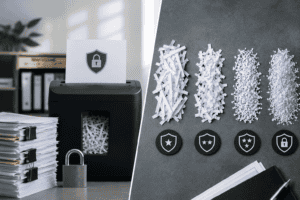
Strip-cut, cross-cut, and micro-cut machines produce different particle sizes. Cross-cut and micro-cut equipment creates smaller fragments than strip-cut equipment, which can provide a higher level of document destruction for sensitive records.
The correct choice depends on the record type, internal risk assessment, applicable policy, and required security level.
POPIA also affects document disposal. Section 14 requires personal information records to be destroyed or deleted when the responsible party no longer holds lawful authority for retention, subject to the Act’s retention provisions. Destruction must prevent reconstruction in an intelligible form
Section 19 requires reasonable technical and organisational safeguards to protect the integrity and confidentiality of personal information. A shredder can form part of a secure disposal process, but the machine alone does not establish POPIA compliance.
Policies, staff controls, retention rules, secure document control, and disposal procedures also form part of information protection.
Five questions to answer before a rental quote request
A precise quote depends on precise information. Gather these five points before a DigiShred quote request:
- How much paper requires destruction? Record daily or weekly volume for regular disposal or estimate archive boxes for a defined project.
- How many staff members share the machine? User numbers help determine capacity, bin size, duty period, and practical machine placement.
- What information appears in the documents? Identify personal, financial, medical, legal, employee, customer, or confidential commercial records.
- How long is the rental period? Specify daily hire, a short project period, or a fixed-term monthly requirement.
- What must the quote cover? Confirm delivery, setup, service, repair terms, consumables, relocation, collection, VAT, renewal, and contract-change conditions.
Accurate answers help DigiShred match the machine and contract to the actual office requirement. The result is a quote that procurement can assess against workload, security, term, and total expected expenditure.
Request a DigiShred rental quote based on volume, security level, location, and rental period.
When a managed document destruction service can be the right option
A rental machine places day-to-day destruction responsibility inside the business. Staff must move documents to the machine, feed material into it, empty the waste container, follow internal disposal rules, and report equipment problems. Such a model is suitable for regular office disposal where volumes are manageable.
Large archive projects or periodic bulk disposal can create a different cost equation. Staff time can become a significant internal expense when hundreds of files or boxes require destruction.
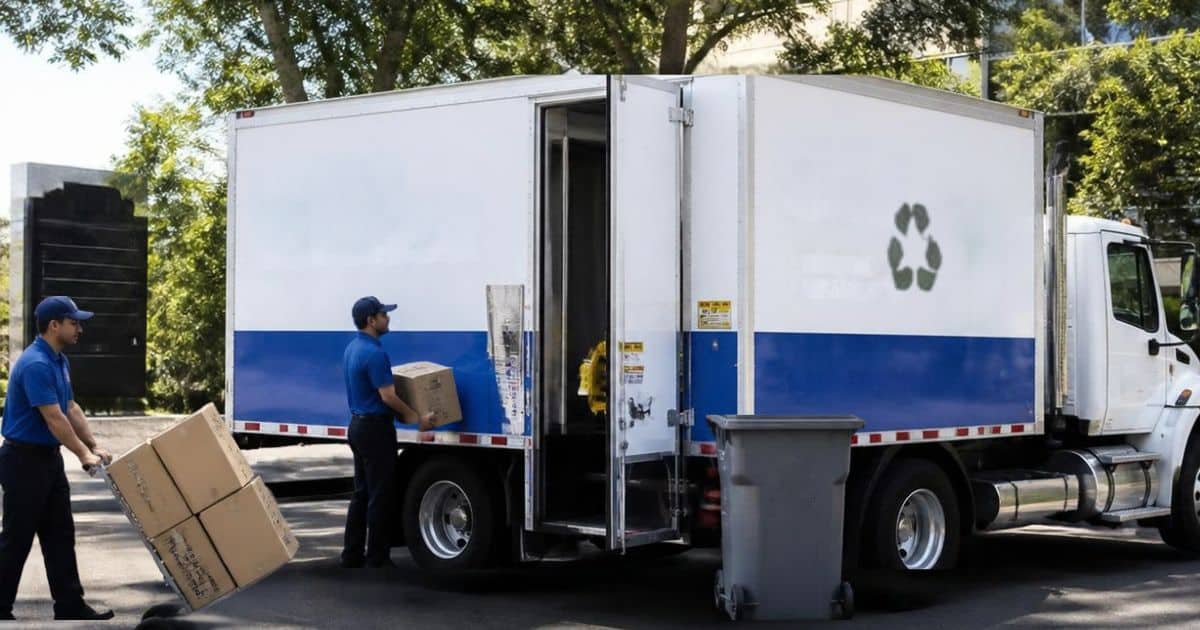
Mobile or off-site secure document destruction can reduce that internal workload and provide a defined chain of custody.
DigiShred’s mobile document destruction service takes place at the client’s premises, while off-site service transfers material through a controlled process for destruction elsewhere. Managed destruction can also provide a Certificate of Destruction as formal evidence of disposal.
A Certificate of Destruction should not be assumed for a self-operated rental machine. Businesses that require formal disposal evidence for audits, policy records, or governance procedures should confirm whether a managed service is more appropriate.

Frequently asked questions
Can a business rent a shredder for a short project?
Yes. DigiShred offers daily hire and short-term rental arrangements alongside fixed-term monthly contracts. Short rental periods are suitable for office moves, archive projects, temporary workload increases, or record-clearance projects where a permanent machine is not required.
Is maintenance included with a DigiShred shredder rental?
Scheduled maintenance and service form part of DigiShred rental agreements. Businesses should still confirm the exact contract scope, repair procedure, consumable responsibilities, and any exclusions before approval, because those details affect the total rental budget.
What happens if a rented shredder develops a fault?
The rental agreement should state the repair process, covered faults, technical support route, and any replacement arrangement. Procurement should confirm these terms before signature, so staff know who handles a fault and which costs are covered.
Can the machine change if business requirements change?
DigiShred can discuss equipment changes when requirements change or when a contract comes up for renewal. A higher paper volume, more staff, or a different security requirement can justify a review of the machine specification.
Can several departments share one commercial shredder?
Yes, provided the machine specification matches total demand. Assess staff numbers, paper volume, document sensitivity, machine placement, bin capacity, and duty period across all departments before a shared-unit decision.
Budget for the right shredder, not only the rental fee
Commercial paper shredder rental costs should be judged against the business requirement behind the quote. Capacity, security level, rental term, service coverage, internal labour, and contract conditions all affect the real budget.
DigiShred can assess paper volume, document sensitivity, staff numbers, location, and rental duration before it recommends an appropriate machine and rental structure. A well-defined brief gives procurement a more dependable basis for cost comparison and document security.
Contact DigiShred for a commercial shredder rental quote tailored to your business requirements.